
“I am a turtle, wherever I go I carry ‘home’ on my back.”
― Gloria E. Anzaldúa, Borderlands/La Frontera: The New Mestiza (1987), pp. 21
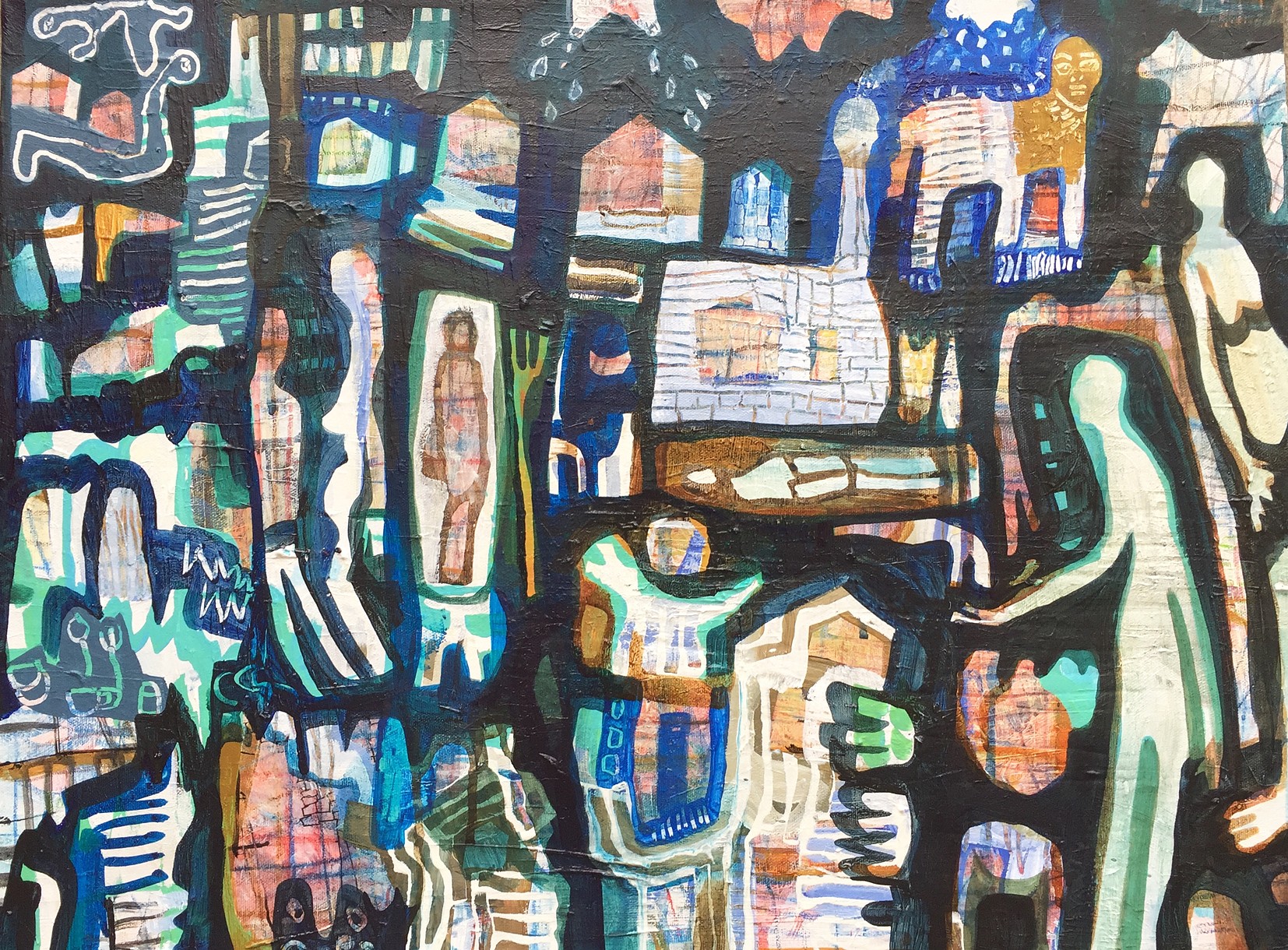
Anzaldua’s quote explores the cultural vibrancy of my personal mystery of self- iterations captured psychically in another country, learning a second language, that which ended up lasting for mutidinous years for me, was always en español or stretching my Spanish and sounding like an Other and foreigner, so that I could return home with a more transcendental self- state.
Did you ever speak a second or third or 4th or 5th tongue (“idioma” in Spanish)? I did not learn Spanish until the ripe old stardust age of 13 years, when I was a deeply pubescent being, which developmental linguists literally proclaim precludes you from fluency– and yet US. American school systems are notably dire at languages compared to the rest of the world, who learn English with fluency from infancy onward. The only course I ever failed in high school was something called “Advanced Placement Spanish,” which is supposed to give you university credits. Moreover, I went to such a stunning high school where the Spanish department – (talk about privilege, it is giving me chills of awe) allowed me to accomplish my own independent Spanish class one-on- one with a Spanish instructor, due to never learning the “subjunctive” tense when I transferred from public high school. My private school was generous enough to help me learn rather than let me fail. My pop quiz average (that is, when my teacher would give us quizzes spontaneously and without warning) in that class was a mere 45% of 100. I have never seen grades so low it still gives me shame shivers to write about it. I promised myself to overcome this shortcoming of mine and learn the hell out of this stunning second, the Spanish language, and speak with bilingualism and fluidity.
I had travelled to the brilliant “pura vida” = “pure life”-style in Costa Rica a few times, and the Spanish there translates directly from our extremely polite U.S. American English – for instance, if you say to someone literally the translation of “Puedo tener un plátano, por favor?” Translates directly into “Can I have a plantain, please? “ and the Costa Rican salesclerks would urgently comprehend me, which was beyond gratifying. I took many wonderful Spanish classes such as “Spanish film” at my college, too, where I discovered my favorite film director in English or in Spanish—Pedro Almovar’s themes and colors were equal parts vibrantly swelling with Spanish architecture and archetypes.
Radiating with idealism, I generated the precipitous decision to study abroad in Chile, mostly based on a Chilean writer whom I treasured with the epitaph, Isabel Allende. I travelled to Concepcion, Chile for my “study abroad,” assuming that the civilization and language promise of Costa Rica, Mexico and Puerto Rico, which were the only archetypes I knew of Spanish-speaking-countries would translate cross- culturally and linguistically. Notably those are all bright, sunny Caribbean cultures, and I ignorantly assumed that the tongue and culture would assimilate anthropologically to this deeply South American Spanish- speaking- country where people do something that roughly is captured into “breaking bread” daily with “tomar once” = “to take or drink eleven” = a colonial and British borrowed- bread and tea hour and afternoon snack. Tapestries compete in distinct Chilean homes on the sheer mystery on how such a spoken- bread and tea hour was ever named “once.”
Concepcion, Chile was bestowed upon me by my Dean of Study Abroad like a fortuneteller presenting me with fork choices in the “road of life.” “Do you want to go on this path?” “Concepcion, Chile resides by the sea and was closer in proximity to the capital city of Santiago. It is very charming and on the cliffs, a beautifully brightly colored beach town.” It sounded like an Almodóvar – fever dream. “Thanks to a classmate, maybe the word “alma gemela= soulmate” blended for me with “companero= classmate” in Spanish, this is now a study abroad option at your university.” The other option was Valparaiso, Chile, which she described as way more remote and a chronically rainy city located in a coalmining hub about 6 hours south of Santiago. What about this rang like a choice, by the way. I had found medicine in beaches in Spanish-speaking countries since before I could even remember. It was decided– I must participate in the one in Concepcion, Chile and eat beach- flavored-empanadas.
Only, utilize your imagination to envision in your head the following that until I arrived in Concepcion, Chile, which was indeed 6 hours south of Santiago that my Study Abroad Dean had indeed gotten her Chilean cities confused. Who would blame her, or even me for having an avoidance of clarifying any information that she uttered? My distinct form of procrastination -affiliated with anxiety was furthermore to blame. My older, far wiser sister Amy was the only person who knew because she read about both regions beforehand and la pobrecita (= “the poor thing”) tried to warn her willfully- in- denial and younger by a lifetime- in a single effervescent moment- sister.
Fast forward to my being a student abroad there, I concurred, somewhat against my will. With my Seasonal Affectiveness Disorder in full-bloom, it was closer than a landslide, when given the rainier remote city versus the sunnier beach town. Let alone leaving my sunnier in summer in home in the northern hemisphere for a southern hemisphere winter. I elected this because the semester would turn into Spring, which I have eternally longed for. Arrival in a shockingly grayer, rainier coal miner town lead to some culture- shock upon arrival.
Not to mention the Spanish language shock. In my advanced placement Spanish from high school, I had learned a copious abundance of vocabulary in Spanish that was utterly basless in my new home. “Puedo tener un plátano, por favor” was gratuitous in Chile, according to my host sister Karina, it did not translate because you are asking for permission for a banana. I go with her to the panaderia – bread store and she says, “Quiero pan, ” which translates into ” I want bread,” which is incredibly dispectfufly rude in U.S. American English, and she utlilizes a mouth-point to indicate which bread she preferred. What kind of madness was this. The weight was heavy of being misunderstood chronically.
To this day one of my most tender friendships, Nomi, a fellow U.S. American studying abroad was a “host aunt” (she lived with the aunties, uncles and grandmother of my host-sister that and brother and with whom I lived). She had far less Spanish education than I did however, she exuded confidence in her delivery, it was beyond spontaneous and fluid. My host brother was struck by her fluency, “Sometimes she says things that do not even make sense, but I don’t discover it until afterwords, because she says it with such a good accent and confidence.” Talk about opposite vitality predicaments. I lacked any kind of belief in my own capacities. I was severely caught in my head as many second language learners feel, and feeling and dealing with it utterly alone.
One day, on the 18 of September, which is Chilean Independence Day, we had an amazing party of the family dancing us the national dance, “La cueca” and attempting to teach us. We arrived early to help the family set up food. My host Aunt, Tencha was preparing a huge mound of vegetables: “quieres picar, Lauri?”= my nickname, she asked me to no avail. I had idea what she was referring to again, because I only knew the word “cortar” which meant “to cut” vegetables. What was this mysterious “picar” she was referring to? I wondered.
I peer over, never shockingly to witness Nomi, of course, already answering my very rude, caught ruminating moment, and in that moment I had my most brilliant, breakthrough second language epiphany. Of course, picar meant “to chop.” Nomi was chopping vegetables by context. She too had learned what picar meant and maybe then committed that word to memory precipitously. Learning a second language, God forbid, was not about translating the language in my head. In fact, even the language “in my head” and anything outside of context were precluding my fluency. Abruptly, reading context was like learning an additional language. Nomi noticed right away how much more fluid my language became. So did the family. Vibrancy and playfulness abounded of being utterly comprehended, at long last.
This one I am prescribing to the masses: if you are attempting to learn a second or third tongue, remember this lesson of cultural vibrancy; never shall I ever rely on concrete or direct translations. Always privilege context. My tongue was suddenly fluent. As in my head, as I began my studies and study abroad in Chile, I encountered context as its own language. The truth will set you free. Let it.