
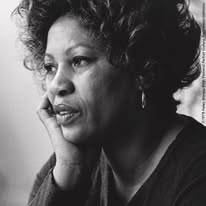
I know the world is bruised and bleeding, and though it is important not to ignore its pain, it is also critical to refuse to succumb to its malevolence. Like failure, chaos contains information that can lead to knowledge-even wisdom. Like art.
– Toni Morrison
Toni Morrison’s quote embodies the biology of a “world is bruised and bleeding” full of pain, and yet awe transcends into wisdom and even art. Further, in her brilliantly and poetically articulated review of Andrea Weber’s “The Biology of Wonder”(2016), Maria Popova defines wonder as “’a biology of feeling and interdependence, in which everything alive is in conviviality with everything else, part of a vast symphony of vitality sonorous with feeling.” What a stunningly vibrant definition. She further narrates that there indeed exists in said definitions “a poetic ecology of wonder” and awe, which she again defines as interbeing. In a transformation of utterly mystical prescience, this was almost 3 years shy of a decade prior to Dacher Kelter’s “Awe: The Transformative Power of Everyday Wonder.” Keltner defines awe as “the feeling of being in the presence of something vast that transcends your understanding of the world.” Words that may be synonyms: “flow, joy, bliss, transcendence, and enlightenment.”
Keltner narrates, in stunningly prosaic definitions, the “Eight Wonders of Life,” a playful play indeed on “the Eight Wonders of the World,” which are wondrous environments that evoke collaborative, soul-stirring spaces and places that give you goosebumps of awe.
In Kelter’s harmonious research, he found that 95% of global awe arises from a construct of awe in witnessing of virtue construct, that which William James defines as “saintly tendencies” in a radiatingly prescient descriptor of the splendor of another human possessing and witnessing “Moral Beauty” and acts of generosity that make our hearts pound and swell with luminosity and appreciation for the courage of humanity. Overcoming Obstacles: Illumination of being moved by others’ courage, too, is an unimaginably striking direct path to resilience through awe. So indeed, it is reverence. I have so many examples among my patients that it feels somewhat cruel to choose. One adolescent (details obscured) whom I have been seeing since he was 5 years old, when he first came to me after he reported his father to his mother, and then the police and then a courtroom to say that his father hurt him physically in a way that made him uncomfortable. Talk about embodying courage. His beloved mother believed him, and so did I. He did this not just for himself but also for her other children, who were afraid to speak up against adults in their families. One of the most stunning aspects of him is that he never felt targeted; indeed, he forgave his father for “doing the best he could at the time.” I would have supported him regardless of his choices; however, our choosing forgiveness and Radical Acceptance while also speaking up directly as a child was beyond what most adults that I know are capable of. He occupied the reverence of his faith (he is an observant Jew), who radically chose loving over hatred.
Collective Effervescence: Keltner utilizes Émile Durkheim’s gorgeous language to evoke an experience of synchronized group energy. In striking language, he defines Collective Effervescence as how “Moving Together Stirs the Awe of Ritual, Sport, Dance, and Public Life.” Examples include dancing together, chanting, or cheering at sporting events. When our bodies throb around one another’s on cue without any conscious awareness, we begin to mirror one another’s body chemistry as soul medicine. Why do most, if not all, babies and children come out knowing how to shake their hips and sternums when we put a rhythmic music? My friend’s child was born a non-verbal autistic, who from childhood onward, could never speak. Could she dance? Yes, in one of her most stunning instances of collective effervescence, she would indeed ballroom dance with her younger brother, both of them were overcoming nearly unrelenting obstacles, and dancing since she was old enough at the ripe old age of two years. I have a dancer psychologist friend whose literal job is to teach blind children to dance. They feel one another’s beautiful rhythms to dance without sight, like my friend dances her face off through utter vibrations. No easy feat!
Nature and “Wild Awe” embodies encountering the natural world. Starry skies, vast oceans, and mountain ranges shrink our egos. How nature becomes spiritually aligned with the body, mind, and soul. For me, it was taking in strikingly coordinated Mayan ruins in Tulum next to the most turquoise of seas that you could imagine. My father died, and I spoke to him from those cliffs on a recent trip, as an adult. We all traveled there as a family numerous times growing up (my parents tended to travel to Isla de Las Mujeres, which was close by). It also felt a bit like a Life and Death awe and downright mystical to imagine all of the humans from the Mayan time onward to have traveled to that same spot where history decided to leave a stunning landmark. Speaking to my father, I was grappling with life and death and the poignancy of existence. Life and Death awe encompasses speaking to my father and the history of ruins; it felt pretty close to Spirituality Awe: Mystical and sacred encounters. This includes religious rituals, meditation, or feeling connected to a divine presence. Speaking to my father directly, along with every Maayan ancestor who had lived and died there, felt as spiritual as I get as an agnostic. It was meditative, and I felt tiny; my ego indeed shrank with this Wild Awe. I was deeply moved byVisual Design: Sacred Geometries. Soul-stirring visual art. Visual Design Awe encompasses magnificent architecture, paintings, and intricate spatial patterns. I indeed had endured goosebumps of awe and wonder while witnessing the splendor of the Mayan ruins, which maintain their hugeness still.
Musical Awe: “Cashmere Blanket of Sound” a truly stunning definition by Keltner. (See Summer Screamer playlist!) At my father’s funeral, one of his most tender friendships, who happens to be a vibrant, prolific cellist, played. How musical awe embraces us in community, Transcendent auditory experiences follow. Life and Death Awe: The poignancy of existence. Witnessing a birth, a metamorphosis, or grappling with mortality falls under this category’s vibrancy. He also played at my sister’s wedding which is indeed another life and death awe . His dear friend visited him in the hospital and played his favorites, including Bach. Life and death awe swells around a musical attention to the vibrant detail of song’s similarities across divergent Life and Death experiences.
Epiphanies: The wonder of sudden insight. This occurs when understanding complex systems, scientific discoveries, or life truths. This is the type of awe that I experience with the most frequency as a later-in-life scientist who did not take a single undergraduate class in Psychology (as an English major with a feminist and Gender studies concentration). Any time I read a book of wonder, it makes me think differently about life, death, and scientific theories. Reading my graduate school advisor’s research gives me chills of“Wow!” Awe leads to resilience.
Kelter prescribes that we engage in awe across the Eight Wonders of Awe at least 2-3 times a week to build our resilience. Which of said categories do you observe awe the most often in? May your life be filled with the ecology of poetic wonder. Here is to finding awe in your life, and passing it on, à la “Collective Effervescence” when our bodies synchronize unwittingly in song or sport or meditatively in chanting sacred prayers, wherever we may embody it.